Try Smart Water Box For Over 90% OFF Today — Order From the Official Site
Smart Water Box is a step-by-step DIY guide for building your own atmospheric water generator at home — no plumbing experience required, no utility hookups needed.
The system is built around a straightforward physical process: drawing ambient air across cooled surfaces so that humidity condenses into collectible liquid water. It's the same principle behind a cold glass forming droplets on a humid day, applied in a practical, repeatable way you can build yourself.
Every stage of the process is explained clearly. From gathering materials at a local hardware store to assembling the unit and handling the collected water safely, the instructions are written for regular people — not engineers. You work through one phase at a time, in an order that makes sense.
For anyone tired of depending entirely on municipal systems, paying for bottled water, or worrying about what happens when supply gets interrupted, Smart Water Box offers a concrete, hands-on alternative you can build and own.

"For years, low water pressure and constant usage advisories made daily life harder than it needed to be. Planning around an unreliable supply got old fast. After building Smart Water Box, that problem went away. We have a steady, consistent source again. I only wish I'd looked into this earlier."
"California drought seasons meant water restrictions were just part of life — always monitoring usage, always second-guessing. Smart Water Box changed that. I don't think about it the same way anymore. Having a source we can generate ourselves has taken a lot of pressure off day-to-day."
"A failing well that needed constant, expensive repairs wasn't something I could keep throwing money at. I needed something more dependable. Smart Water Box gave us a real backup that actually holds up. The difference it's made around here has been bigger than I anticipated."
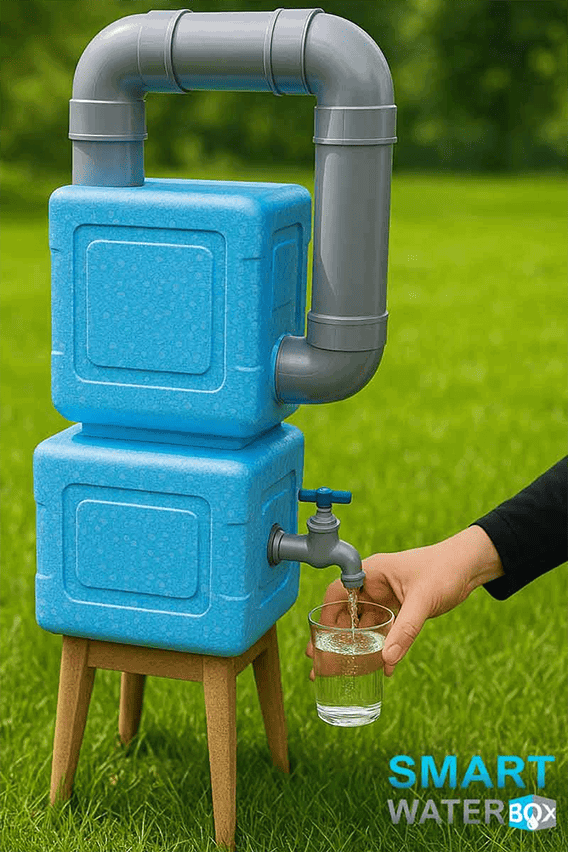
Smart Water Box is not a plug-in device, and it's not a product you order to your door. It's a detailed, practical guide built around one straightforward idea: using the moisture already present in the air around you as a source of usable water. At its core, it describes a DIY atmospheric water generator — a system that cools incoming air past its dew point so that humidity turns into liquid you can collect and use.
What separates it from buying an off-the-shelf dehumidifier or commercial AWG unit is the approach. Instead of selling you finished hardware, Smart Water Box gives you the knowledge to build one yourself using accessible components — fans, coils, a collection chamber — assembled in a configuration that functions in real-world conditions. The underlying physics (condensation, heat exchange, airflow) are the same principles found in everyday HVAC systems and dehumidifiers. Smart Water Box takes those concepts out of the manual and puts them into a format that regular homeowners can actually follow.
The system is designed around independence. It doesn't tap into municipal supply lines or require utility connections. No waiting for pressure to return, no scheduling around delivery windows, no concern about what happens when the tap goes dry. The water comes from air — continuously, as long as conditions allow.
That said, the guide doesn't oversell what it does. Output depends on humidity, ambient temperature, and how carefully the unit is built. In humid climates, results can be surprisingly consistent. In drier areas, the system requires thoughtful placement and optimization. The guide addresses both scenarios honestly instead of glossing over them.
The bigger shift is conceptual. Most people receive water passively — it comes through pipes managed by someone else. Smart Water Box asks you to flip that assumption and take an active role in producing at least part of your own supply. That's a meaningful change regardless of how much water the system ultimately generates.
To be direct about what this is: it's not classified technology, and it's not experimental in some mysterious way. Atmospheric water generation is a documented field used in military operations, humanitarian relief, and commercial applications. Smart Water Box makes that same concept accessible and buildable at home without requiring an engineering background or a large budget.
In plain terms: it's a complete, step-by-step guide that shows you how to pull water from air using basic components, clear instructions, and sound physical principles. Practical, transparent, and built for people who want real control over an essential resource.
1. Atmospheric Moisture and Condensation
Air holds water vapor at all times — even when humidity feels low. The amount it can carry depends on temperature: warmer air holds more vapor, cooler air holds less. When air is chilled below a specific threshold called the dew point, it can no longer contain all of its moisture. The excess water vapor converts into liquid droplets, which is exactly how morning dew forms and how condensation appears on cold surfaces. Smart Water Box replicates this naturally occurring process in a compact, controlled system.
2. Heat Exchange and Dew Point Management
The functional core of the setup is a basic heat exchange mechanism. Warm, moisture-laden air is drawn across a cooled surface — typically metal coils — which rapidly reduces the air temperature. The goal is to reach the dew point efficiently, because that's where condensation output is highest. The greater the temperature differential between the incoming air and the cooled surface, and the more airflow moving through the system, the more water can be extracted from the same volume of air.
3. Collection, Filtration, and Practical Output
Once condensation forms on the cooled surface, gravity does the rest. Water drips into a collection chamber, where it is then filtered and stored for use. Total output is not unlimited — it varies with local humidity, ambient temperature, and the quality of the build — but in suitable conditions, the system can produce a steady, usable supply on a continuous basis. The underlying mechanism is straightforward thermodynamics, not proprietary or complex technology, which means it can be built, understood, and maintained by anyone who follows the guide carefully.
1. The Complete Step-by-Step Build Guide
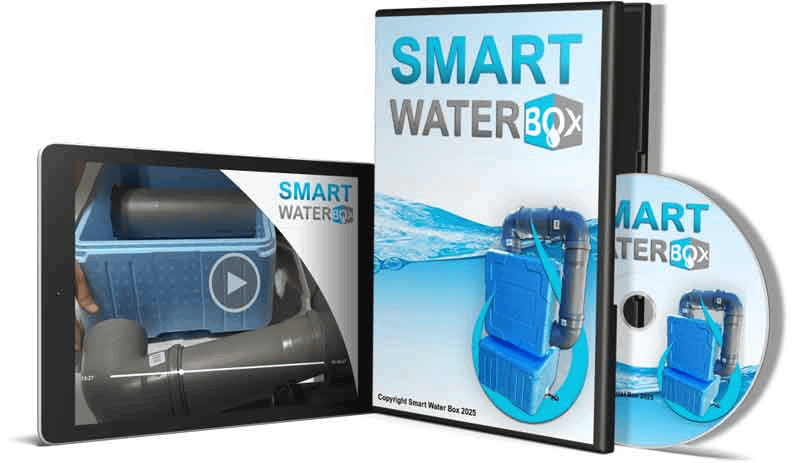
The foundation of Smart Water Box is its full construction walkthrough. This section takes you from start to finish — from understanding the concept to having a working unit assembled. The writing avoids unnecessary technical language, making each phase approachable even for people who have never built anything like this before.
2. Simplified System Blueprints
Alongside the written instructions, the guide includes structured layouts that show how all the components connect. These aren't dense engineering diagrams — they're practical visual references that help you understand how airflow, the cooling system, and the collection chamber work together as a single integrated unit.
3. Complete Materials and Tools Checklist
One of the most immediately useful sections is the itemized parts list. It tells you exactly what to buy, where most of these materials are commonly found, and which substitutions work if a specific part isn't available nearby. This removes the guesswork that typically derails DIY projects at the shopping stage.
4. Assembly Instructions for Every Build Stage
The guide doesn't just list parts — it walks you through connecting them. Each phase of construction is broken into manageable steps that explain how to position components, set up airflow paths, install collection points, and verify that each part of the system is functioning as intended before moving on.
5. Water Collection and Purification Guidance
Collected atmospheric water is relatively clean by nature, but it still benefits from proper handling. This section covers basic filtration methods, storage recommendations, and practical steps to maintain water quality for drinking, cooking, or general household use.
6. System Optimization Techniques
Because output depends heavily on environmental conditions, the guide includes targeted tips for improving performance. These cover placement strategies, airflow tuning, insulation improvements, and environmental positioning to help you get more water production from your specific climate and living situation.
7. Troubleshooting Support
The guide acknowledges that first builds don't always go perfectly. This section covers the most common issues — low condensation output, airflow imbalance, reduced efficiency after initial use — and provides practical steps to identify and correct each problem without starting over.
8. Bonus DIY Resources
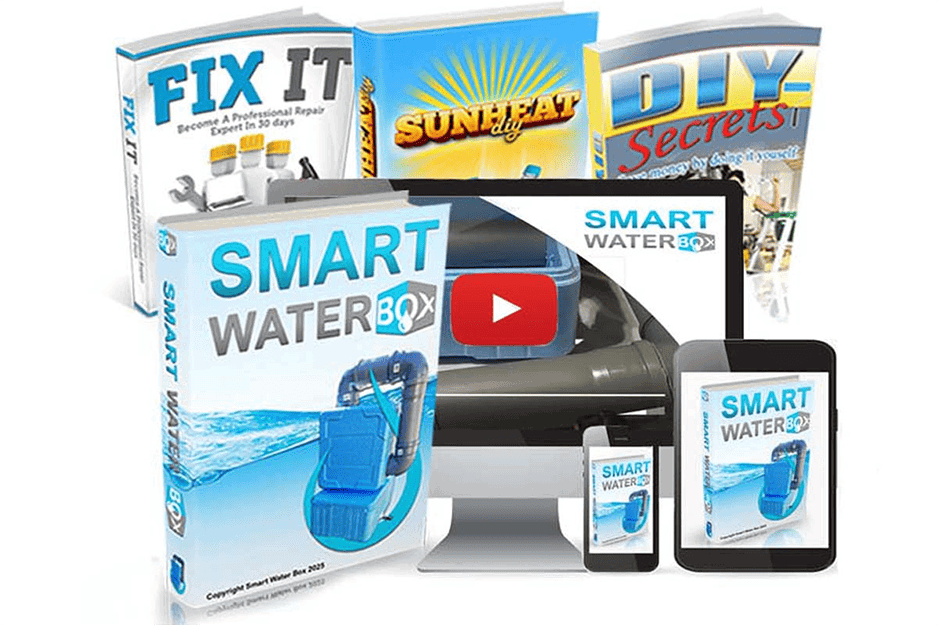
Depending on the version purchased, Smart Water Box includes additional guides focused on related self-sufficiency topics, such as solar water heating systems and practical home maintenance skills. These additions extend the value of the package well beyond atmospheric water generation alone.
Today: FREE
Once you can generate water from air, the practical next question is heating it. This bonus guide covers building a simple solar-powered water heating system using basic materials — no gas lines or electric heaters involved. Sunlight does the work. The focus is on making your generated water usable for everyday comfort: showers, dishwashing, and sanitation, all without pulling from the grid. It pairs naturally with the main guide and extends your water independence into hot water territory.
Today: FREE
This guide connects to the same core principle as Smart Water Box: reducing how much you depend on others to maintain your home. It covers practical fixes and small-scale improvements that homeowners typically pay contractors for — better insulation, energy waste reduction, and basic repairs you can handle yourself. The goal isn't clever workarounds. It's helping you understand how your home actually functions, so routine issues don't require an outside service call every time.
Today: FREE
Most DIY guides deliver their content and leave you to figure out the rest on your own. This bonus changes that. Ongoing support is available when something doesn't go as expected — whether it's a construction issue, an output problem, or confusion at a specific step. For people building something like this for the first time, having access to real help mid-project makes a meaningful difference. It functions as a practical safety net throughout the entire process, not just at the beginning.
Every Smart Water Box purchase is backed by a full 60-day money-back guarantee. That means you have two full months to go through the guide, understand the system, gather materials, and actually attempt the build in your own space. If it doesn't deliver what you were expecting — or simply isn't the right fit for your situation — you can request a complete refund without having to justify your decision or fill out complicated forms.
The guarantee is intentionally straightforward. No hoops to jump through, no conditions buried in small print, and no requirement to demonstrate results. If you decide it's not for you before the 60 days are up, you get your full payment back. It's set up this way to take the pressure out of the decision so you can evaluate the system honestly on your own terms.
Start by reading through the guide once before purchasing any materials. Getting familiar with the full process first helps you shop more efficiently and avoid common early mistakes. Then gather everything on the parts checklist — most items are available at standard hardware stores — and begin assembly according to the step-by-step instructions.
Airflow and coil placement are the two areas that have the most impact on performance, so take extra care with both. Work through the build methodically rather than rushing. Small details during construction have an outsized effect on how well the system produces water once it's running.
Once assembled, position the unit in an area with good air circulation and reasonable humidity. Run it continuously and allow time for condensation to build up and begin collecting in the tank. Before using the collected water, apply the filtration steps described in the guide. From there, check the system periodically — clean it as recommended, and make placement or airflow adjustments if output drops, since local temperature and humidity directly influence daily production.
Smart Water Box is not the right fit for every household — and that's worth being upfront about. It works best for people who already feel the limitations of their current water setup and want a hands-on, controllable alternative.
People dealing with unreliable water supply
If your area experiences frequent shortages, inconsistent pressure, or sudden cutoffs, this system gives you a way to generate water without waiting for external supply to recover. Having something you control independently changes how you handle those situations.
Households in drought-prone or water-restricted regions
When daily usage is monitored or limited by outside forces, an independent source reduces the constant stress of staying within allowed amounts. It won't replace everything, but it can comfortably cover essential needs.
DIY-minded individuals, including beginners
You don't need a technical background, but you do need the willingness to build something yourself and follow instructions carefully. People who are comfortable figuring things out as they go tend to get the most value from this guide.
Anyone looking to reduce ongoing water expenses
If bottled water is a regular household line item, or if utility costs keep climbing, this system offers a way to offset some of that spending over time. The savings build gradually, not overnight.
Preparedness-focused households
For people who think about backup systems and resilience planning, Smart Water Box fits naturally. It's not about fear — it's about having a reliable fallback when standard systems fail or become unavailable.
Smaller households needing a supplemental source
The system works best as a supporting supply rather than a complete household replacement. For drinking water, basic daily needs, or emergency situations, it can be more than enough for one or two people.
Clicking the "Buy Now" button takes you directly to a secure checkout page. Enter your payment details, and you'll receive instant access to the complete Smart Water Box guide along with all three bonus resources. Delivery is digital, so there's no shipping wait — everything arrives in your inbox within minutes of your purchase being confirmed.
Yes — but only if you follow the purification steps properly. The system collects condensed moisture, which starts out relatively clean by nature, but safe drinking water depends on proper filtration, storage hygiene, and following the handling steps outlined in the guide. Skipping those steps can affect water quality quickly, so that part of the process matters just as much as the build itself.
Output depends on humidity levels, ambient temperature, and the quality of your build. In favorable conditions — particularly higher-humidity environments — the system can produce a meaningful and steady supply. In drier or cooler climates, output will be lower. Think of it as a supplemental water source first. It performs best as a reliable addition to your existing setup, not a complete standalone replacement for all household needs.
Not really. If you can follow step-by-step instructions and handle basic household tools, you can build this system. It requires patience and attention to detail more than it requires technical ability. Most people who run into difficulty during the build find it's less about the complexity of the task and more about not following a specific step closely enough.
It can produce water in low-humidity climates, but output drops noticeably compared to more humid environments. In dry conditions, careful placement and system optimization become more important. This isn't a solution designed for arid desert environments, but in many cases, some water production is still possible with the right setup and positioning.
It needs periodic attention to keep running well. Regular cleaning, basic maintenance, and occasional small adjustments are part of the process. That said, none of the upkeep is overly involved — most of it you can handle yourself in a short amount of time. It's a system that rewards consistent, simple care rather than demanding complex servicing.