Try Smart Water Box For Over 90% OFF Today! Order From Official Site
Smart Water Box is a DIY atmospheric water generator that turns humidity into usable water. Build a simple system at home to create a steady, independent water source.
Smart Water Box focuses on one practical idea—extracting water from the air using condensation. Instead of relying fully on external supply, it gives you a way to produce water on your own terms.
The system is broken down into clear, step-by-step instructions so you don’t need technical expertise. It’s built using accessible parts and straightforward methods that prioritize function over complexity.
For anyone looking to reduce dependence on traditional water systems, Smart Water Box offers a hands-on, realistic approach to creating a small but reliable water source at home.
"I spent years dealing with low water pressure and constant advisories in our area. It got exhausting planning daily life around it. After building Smart Water Box, things finally changed. We have steady water again. Wish I had done this sooner."
"Living through drought seasons in California meant always worrying about water limits. It felt like everything was restricted. Since using Smart Water Box, I’ve stopped stressing about daily use. It’s been a real shift for our home."
"Our well kept failing, and repairs were draining money year after year. I needed something reliable. Smart Water Box gave us a consistent backup we can count on. It’s made a bigger difference than I expected."
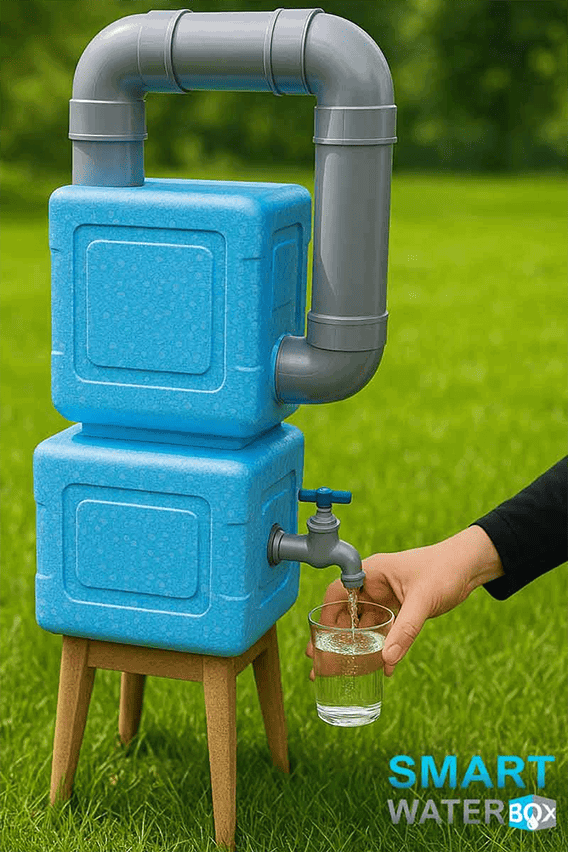
Smart Water Box isn’t a gadget you plug in and forget about. It’s a stripped-down, practical system built around one idea: pulling usable water directly from the air you’re already living in. At its core, it’s a DIY atmospheric water generator—nothing mystical, just controlled condensation. Air gets pulled in, cooled past its dew point, and the moisture that naturally exists in humidity turns into liquid water you can collect and use.
What makes it different from the usual “water from air” devices is how it’s packaged and explained. Instead of selling you an overpriced machine, Smart Water Box is a set of simplified, real-world instructions. It takes something that normally sits behind engineering jargon and breaks it into steps a regular person can follow without needing a lab, a contractor, or a specialized background. You’re essentially building a compact system using accessible parts—fans, coils, a collection chamber—configured in a way that actually works outside of theory.
The system is designed with independence in mind. It doesn’t rely on municipal pipelines, scheduled supply, or utility permissions. That means no waiting for pressure to return, no worrying about outages, and no dependency on whether the tap decides to cooperate that day. You’re not storing water for later—you’re producing it continuously, based on the moisture already present in the air around you.
Another important detail that often gets overlooked: Smart Water Box isn’t pretending to be magic. Output depends on humidity, temperature, and how well the system is built. In high-humidity environments, production can be surprisingly consistent. In drier conditions, it requires optimization. The guide leans into that reality instead of hiding it, which is why people who build it successfully tend to treat it less like a toy and more like a working piece of infrastructure.
There’s also a mindset shift baked into it. Most people approach water as something delivered to them—through pipes, trucks, or bottles. This flips that assumption. You’re not tapping into a supply chain; you’re creating your own source, however small or large you choose to scale it. That difference matters more than the hardware itself.
It’s worth saying clearly: this isn’t some “classified” breakthrough or a “secret government device”. The underlying principles—condensation, heat exchange, airflow—are well understood and widely used in dehumidifiers and HVAC systems. What Smart Water Box does is repurpose those ideas into a format that’s accessible, portable, and buildable without gatekeeping.
In simple terms, Smart Water Box is a guide that shows you how to turn ambient air into a usable water source using basic components and a clear process. Not a miracle. Not a fantasy. Just a practical system that trades complexity and dependence for control and self-reliance.
1. Atmospheric Moisture & Condensation
The system is built on a simple physical principle: air always contains water vapor, even when it feels dry. When that air is cooled below its dew point, it can no longer hold all its moisture, so the vapor turns into liquid droplets. Smart Water Box recreates this process in a controlled environment—essentially mimicking how dew forms overnight or how water beads appear on a cold surface.
2. Heat Exchange & Dew Point Control
At the core of the setup is a basic heat exchange process. Warm, humid air is pulled across a cooled surface (usually metal coils), which rapidly drops its temperature. The key is reaching the dew point efficiently—this is where maximum condensation happens. The better the temperature difference and airflow, the more water can be extracted from the same volume of air.
3. Collection, Filtration & Practical Output
Once condensation forms, gravity takes over. The water drips into a collection chamber, where it can be filtered and stored. Output isn’t unlimited—it depends on humidity, temperature, and airflow design—but under the right conditions, the system can produce a steady, usable supply. In simple terms, it turns ambient air into a renewable water source using basic thermodynamics, not complex or “mysterious” technology.
1. The Complete Step-by-Step Build Guide
The core of Smart Water Box is its detailed construction manual. This section walks you through the entire process of building your own atmospheric water generation system from start to finish. The instructions are written in practical, straightforward language, breaking down each stage so even beginners can follow along without feeling overwhelmed by technical jargon.
2. Simplified System Blueprints
Inside the guide, you’ll find structured blueprints that map out how every component fits together. These aren’t overly complicated engineering schematics—they’re simplified layouts designed to help users visualize the system clearly and understand how airflow, condensation, and collection work as one connected process.
3. Complete Materials and Tools Checklist
One of the most useful parts of Smart Water Box is the itemized parts list. It outlines exactly what materials are needed, where they’re commonly available, and what alternatives can be used if certain parts aren’t accessible. This helps eliminate guesswork and keeps the project realistic for everyday builders.
4. Assembly Instructions for Every Stage
The guide doesn’t just tell you what parts to gather—it explains precisely how to assemble them. Each build phase is broken into manageable sections, showing how to connect components, position airflow systems, install collection points, and ensure the setup functions efficiently.
5. Water Collection and Purification Guidance
Smart Water Box also includes instructions for handling the collected water properly. This section explains basic purification methods, storage recommendations, and practical steps to help ensure the water remains clean and usable for drinking, cooking, or household purposes.
6. System Optimization Techniques
Because atmospheric water generation depends heavily on environmental conditions, the guide includes performance optimization tips. It explains how to improve output through placement, airflow adjustment, insulation improvements, and environmental positioning to get better water production based on local humidity levels.
7. Troubleshooting Support
Not every build works perfectly on the first attempt, and this section addresses that reality. It covers common issues users might face—such as low condensation, airflow imbalance, or reduced efficiency—and offers practical solutions to help fine-tune the system.
8. Bonus DIY Resources
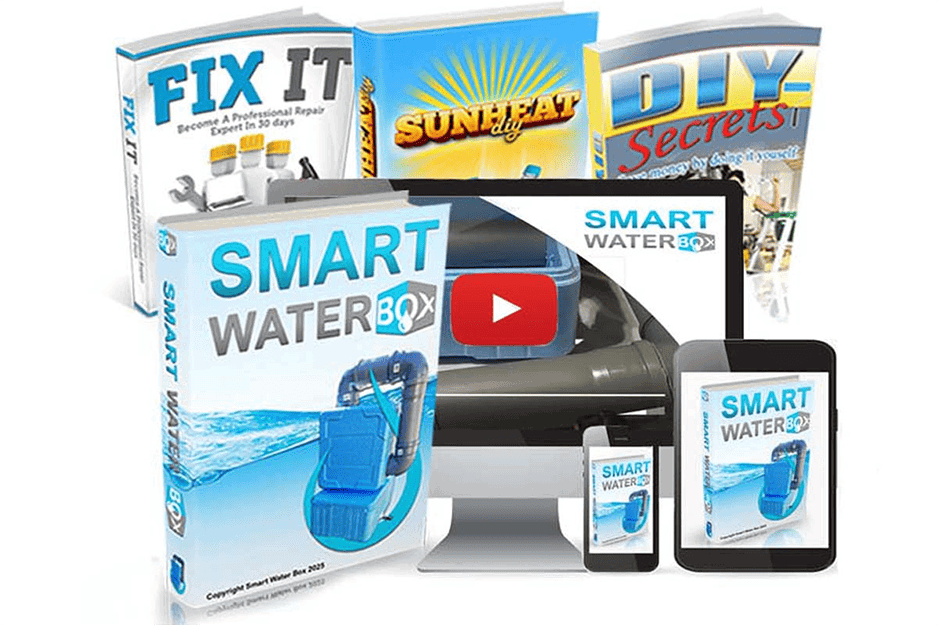
Depending on the version purchased, Smart Water Box often includes additional guides focused on related self-reliance projects, such as solar water heating systems and practical home efficiency upgrades. These bonuses expand the value beyond water generation and support broader household independence.
Today: FREE
This bonus focuses on something most people overlook until it’s gone—hot water. It’s a step-by-step guide that shows how to build a simple solar-powered heating setup using basic materials. No gas lines, no electric heaters. Just sunlight doing the work. The idea is straightforward: once you can generate water, the next logical step is making it usable for daily comfort—showers, cleaning, sanitation—without depending on the grid.
Today: FREE
This isn’t directly about water, but it connects to the same mindset—reducing dependence. This guide covers practical home fixes and small upgrades that people usually pay contractors for. Things like improving insulation, cutting energy waste, and handling basic repairs yourself. It’s less about “hacks” and more about learning how your home actually works so you’re not stuck paying for every small issue.
Today: FREE
Most DIY guides leave you on your own after download. This bonus fills that gap. You get ongoing access to real support when something doesn’t go as planned—whether it’s a build issue, performance problem, or just confusion mid-process. It’s essentially a safety net, especially for people who aren’t used to building things from scratch.
Smart Water Box comes with a 60-day money-back guarantee, which means you’re not locked into your decision the moment you purchase. You’re given time to actually go through the guide, understand the system, and even attempt the build in a real-world setting. If it doesn’t meet your expectations—or simply doesn’t feel right for your situation—you can request a refund without being put through complicated steps or justifications.
What makes this guarantee stand out is its straightforward approach. There’s no requirement to prove results, no long forms, and no hidden conditions buried in fine print. If you decide it’s not for you within the 60-day window, you can get your full payment back. It’s designed to remove hesitation and give you space to evaluate the system without pressure or commitment.
Start by gathering the materials listed in the Smart Water Box guide and assembling the system step by step. Focus on proper airflow and coil placement, since these directly affect performance. Take your time during setup—small mistakes here can reduce water output later.
Once assembled, place the unit in an area with good airflow and moderate humidity. Turn on the system and allow it to run continuously. Over time, you’ll notice condensation forming and collecting in the tank as usable water.
Before using the collected water, follow the guide’s basic filtration and storage steps. Clean the system periodically to maintain efficiency. Adjust placement or airflow if output drops, since environmental conditions like temperature and humidity play a major role.
Smart Water Box isn’t for everyone—and that’s worth saying upfront. It’s most useful for people who actually feel the limits of their current water setup and want a practical alternative they can control.
People dealing with unreliable water supply
If your area faces frequent shortages, low pressure, or sudden cutoffs, this system makes sense. It gives you a way to generate water without waiting on external supply to come back.
Households in drought-prone or restricted regions
If water usage is monitored, limited, or unpredictable, having a small independent source reduces day-to-day stress. It won’t replace everything, but it can cover essential needs.
DIY-minded individuals (even beginners)
You don’t need to be an engineer, but you do need a willingness to build something yourself. If you’re comfortable following instructions and figuring things out as you go, you’ll get the most out of it.
People looking to reduce ongoing costs
If you regularly spend on bottled water or deal with rising utility bills, this offers a way to offset some of that over time. It’s not instant savings—but it adds up.
Preppers and emergency-focused users
For those who think in terms of backup systems, this fits naturally. It’s not about fear—it’s about having a fallback when normal systems fail.
Small households needing supplemental water
It works best as a supporting source rather than a full replacement for large families. For drinking, basic use, or emergencies, it can be enough.
What happens when you press the “Buy Now” button? As soon as you click the “Buy Now” button located below this text, you’ll be directed to a safe checkout page.
Simply input your details, and you’ll gain immediate access to the full Smart Water Box Program.
Yes—but only if you follow the purification steps properly. The system collects condensed moisture, which is relatively clean, but safe drinking depends on filtration, storage, and hygiene. Skip those steps, and quality can drop quickly.
Output depends heavily on humidity, temperature, and setup quality. In favorable conditions, it can produce a steady supply, but it’s not unlimited. Think of it as a supplemental source, not a guaranteed full replacement for all household needs.
Not really. If you can follow step-by-step instructions and handle basic tools, you can build it. It’s more about patience than expertise. Most people struggle more with attention to detail than with actual difficulty.
It can—but performance drops in low humidity. You may need to optimize placement or adjust the system to improve efficiency. This isn’t a magic solution for deserts, but it can still produce usable water under the right conditions.
It’s not “set and forget.” You’ll need occasional cleaning, basic maintenance, and small adjustments over time. The good part is, nothing is overly complex—most upkeep is simple and manageable without outside help.